

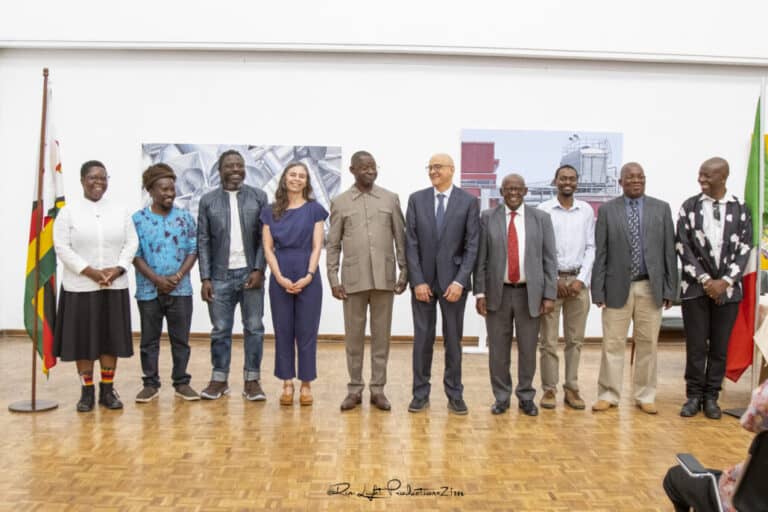
Zimbabwe to showcase “Second Nature | Manyonga” National Pavilion at the 2026 Venice Biennale

Zimbabwe to showcase “Second Nature | Manyonga” National Pavilion at the 2026 Venice Biennale
For all the News from Mashonaland Central, Join One of Our Groups: https://chat.whatsapp.com/KPKHV62YLF92BvfqmgemLT
Zimbabwe is set to return to the Venice Biennale in 2026 with a full-scale National Pavilion exhibition titled Second Nature | Manyonga, an artistic project framed around survival, adaptation and resilience at a time of climate anxiety, economic uncertainty and social upheaval.
The pavilion will bring together five Zimbabwean contemporary artists — Gideon Gomo, Eva Raath, Franklyn Dzingai, Felix Shumba and Pardon Mapondera — under the curatorship of Fadzai Veronica Muchemwa. According to the published description of the exhibition, the central inquiry asks how people “endure and reimagine ourselves in uncertain times”.
The title combines two ideas. “Second Nature” refers to instincts and learned habits formed under pressure, while “Manyonga”, a Shona term, is associated with fragments or scattered remnants. The curatorial concept links rupture and renewal, exploring what it means to live through disruption while attempting to rebuild and reimagine.
Muchemwa describes the pavilion as a reflection on personal and collective survival — a theme that resonates in Zimbabwe’s everyday experiences across homes, markets, studios and fields, where communities frequently navigate economic and environmental challenges.
Each participating artist is expected to contribute work aligned to the pavilion’s shared themes. The exhibition outline notes that Gomo’s mixed-media approach often draws on textured surfaces to explore identity and memory, while Raath’s painting and installation practice engages with fragility and transformation. Dzingai’s figurative painting is described as probing emotional responses to unstable environments, and Shumba’s sculptural work is positioned around cultural endurance and evolving identity. Mapondera, known for immersive installations made from repurposed materials, is associated with themes including displacement, migration and survival.
To Advertise Inbox Us: https://wa.me/263719679800
Zimbabwe’s participation at Venice has also been presented as part of the country’s cultural diplomacy and growing international artistic footprint, with each pavilion serving as a statement of presence within global conversations about art, identity and the future.
The 2026 edition comes as international audiences grapple with overlapping crises, including climate change, shifting technologies and geopolitical tensions. Rather than offering easy answers, Second Nature | Manyonga is framed as an invitation to reflect on lived experience, including the ways people adapt to uncertainty and piece life together from what remains.
The pavilion design is expected to emphasise immersion, with painting, sculpture and installation presented in conversation rather than as isolated works. Viewers, the exhibition description suggests, will move through an environment intended to echo uncertainty while providing moments of grounding and reflection.
For Zimbabwe’s arts sector, the National Pavilion is also being positioned as evidence of the value of sustained investment in creative industries, which act both as an economic contributor and as a repository of national memory. The pavilion is likely to draw attention at home as well, particularly among younger artists following developments from Harare, Bulawayo and other centres.
As preparations continue towards the 2026 opening in Venice, the pavilion’s theme points to a broader message: survival is not only about holding on, but also about transformation — turning fragments into form and making resilience a “second nature”.
Follow Our WhatsApp Channel for all the News from Mashonaland Central – Bindura, Mbire, Guruve, Mount Darwin, Rushinga, Shamva, Mazowe & Muzarabani: https://whatsapp.com/channel/0029VacMUmW5fM5a666kb33A


Mundubile seeks new party route as Hichilema eyes second term
Mundubile seeks new party route as Hichilema eyes second term For all the News from Mashon…

Baradzanwa Cultural Village Emerges as a Premier New Year Tourism Destination in Mazowe
For all the News from Mashonaland Central, Join One of Our Groups Multitudes of …