

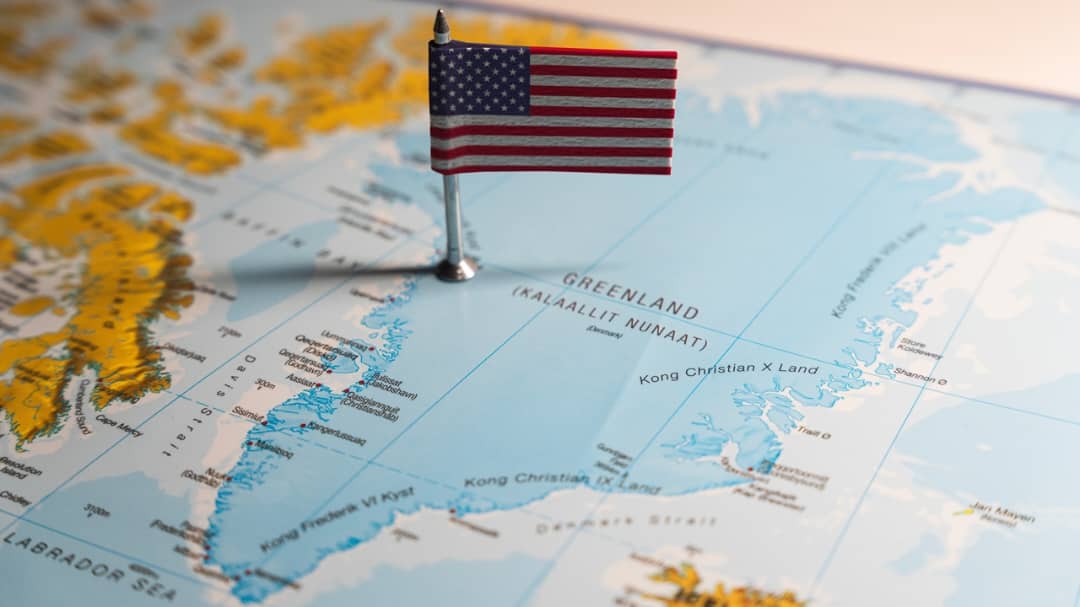
Greenland rare earth deal puts pressure on Africa’s critical minerals pitch

Greenland rare earth deal puts pressure on Africa’s critical minerals pitch
For all the News from Mashonaland Central, Join One of Our Groups
A 15-year US rare earth offtake agreement linked to Greenland’s Tanbreez project is expected to intensify competition for critical minerals investment that has increasingly targeted Africa, as Washington seeks supply chains that reduce reliance on China.
Business Insider Africa reports that REalloys, a Florida-based rare earth materials company, signed the long-term deal with Critical Metals Corp for 15% of Phase 1 production from Tanbreez in southern Greenland. The deposit is described as one of the world’s largest known sources of heavy rare earth elements, including dysprosium and terbium, which are used in defence technologies such as fighter jets, missile systems, radar platforms and drones.
The agreement comes ahead of a Pentagon requirement due to take effect in 2027 that will restrict the use of Chinese-origin rare earth materials in key defence applications, increasing urgency for alternative supply.
China currently dominates the global rare earth industry. According to the International Energy Agency estimates cited in the report, China accounted for about 60% of global mining production and around 91% of refining capacity in 2024.
Africa has been central to global competition for critical minerals, with the continent estimated to hold about 30% of the world’s proven critical mineral reserves. However, the report notes that insecurity, regulatory delays and operational constraints in some jurisdictions have made politically stable locations such as Greenland more attractive to investors and strategic buyers.
It cites several challenges affecting the pace at which some African projects can become reliable suppliers for Western markets. In the Democratic Republic of Congo, Washington signed a strategic minerals agreement in December 2025, but persistent insecurity in the east continues to raise concerns despite Kinshasa’s reported US$100 million push to improve mining security, including a specialised force backed by US and Emirati investment.
Elsewhere, instability and security threats linked to armed groups are cited as complicating mining operations in Mali. In Mozambique, the insurgency in Cabo Delgado has raised risks for major resource investments, including projects linked to the Balama graphite mine. The report also points to regulatory and licensing disputes delaying Kenya’s Mrima Hill project, while some ventures in Madagascar have faced permitting hurdles.
Despite these constraints, Africa’s rare earth pipeline is still expanding, with multiple projects moving towards production. The report states that Lindian Resources plans to begin production at Kangankunde in Malawi by late 2026, while Pensana’s Longonjo project in Angola could enter production in 2027.
Other projects referenced include Peak Rare Earths’ Ngualla in Tanzania, Mkango Resources’ Songwe Hill in Malawi, and Rainbow Rare Earths’ Phalaborwa project in South Africa. New exploration results are also adding momentum: Sovereign Metals announced the discovery of high-grade heavy rare earth elements at its Kasiya graphite and rutile project in Malawi on May 27, while Tsodilo Resources confirmed significant rare earth mineralisation at Botswana’s Gcwihaba Metals Project.
Namibia’s Lofdal project, being developed by Namibia Critical Metals in partnership with Japan’s JOGMEC, is highlighted as one of Africa’s more promising heavy rare earth deposits.
Benchmark Mineral Intelligence estimated in 2024 that Africa could account for about 9% of the global rare earth market by 2029 if projects under development proceed as planned.
For Zimbabwe’s mining communities, including those in Mashonaland Central where mining and mineral trade are significant to local livelihoods, the shift in global supply priorities may influence future investment flows, beneficiation opportunities and demand for minerals linked to clean energy and defence supply chains.






Mundubile seeks new party route as Hichilema eyes second term
Mundubile seeks new party route as Hichilema eyes second term For all the News from Mashon…

Baradzanwa Cultural Village Emerges as a Premier New Year Tourism Destination in Mazowe
For all the News from Mashonaland Central, Join One of Our Groups Multitudes of …