

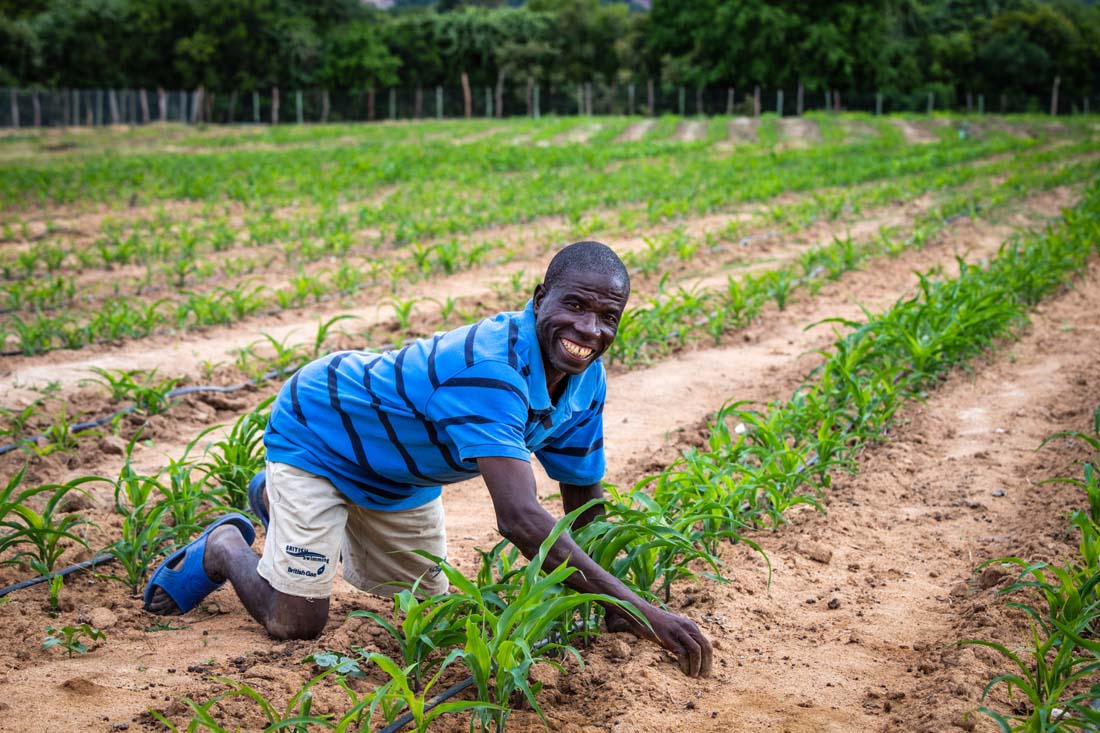
Treasury’s 2027 plan targets grain reserves, irrigation and private infrastructure funding

Treasury’s 2027 plan targets grain reserves, irrigation and private infrastructure funding
For all the News from Mashonaland Central, Join One of Our Groups
Zimbabwe’s Treasury says it is moving to build stronger economic buffers against climate-related disruptions and global commodity shocks, as consultations begin for the 2027 National Budget.
Finance, Economic Development and Investment Promotion Minister Professor Mthuli Ncube outlined what he described as a six-pillar approach in line with the 2027 Budget Strategy Paper, placing food security measures, climate resilience and increased private-sector participation at the centre of Government planning.
A key proposal is to widen the private sector’s role in food security by allowing private players to import grain, while removing duties on fertiliser imports. “We are going to allow for importation of grain by the private sector. So, the private sector is going to be a partner in our response to the climate shocks, but also to the global shocks,” Professor Ncube said.
Treasury is also targeting strategic grain reserves of at least 500,000 metric tonnes, mainly maize, with some wheat. The reserves are intended to support vulnerable households during the peak drought period, which the Minister said typically falls between October and March.
On agricultural production, Government plans include strengthening irrigation, expanding the Pfumvudza/Intwasa programme, and continuing support through inputs and services. “Another pillar to our six-pillar strategy is supporting the Pfumvudza/Intwasa programme… So, we give out seed, fertiliser, including lime to treat the acidic soils, and just agricultural extension services,” he said.
Early-warning capacity is also part of the resilience agenda, with continued investment planned for meteorological infrastructure, including additional radar equipment.
Beyond agriculture, Treasury says it is preparing for potential declines in global mineral prices and ongoing volatility in energy markets. Professor Ncube said Government would put more emphasis on beneficiation, aimed at extracting higher value from minerals before export.
“For commodity shocks, because we expect also a drop in the general prices of base metals and other minerals, we are focusing on beneficiation, so that we can maximise the value of what is exported,” he said.
In a further bid to reduce exposure to imports, the Minister said Zimbabwe aims to expand domestic fertiliser production using coal and phosphates over the next 18 months.
Fuel costs remain a concern for households and businesses, with Treasury continuing to use taxes and levies to cushion against international oil price movements. Professor Ncube also said petrol blending would remain part of the policy mix, which he said could reduce the pump price by as much as 15 US cents per litre.
On infrastructure development, Treasury signalled a stronger push to mobilise private capital for large projects, rather than relying only on the public purse. “We’re very determined, going forward, to crowd in the private sector in our infrastructure finance agenda,” Professor Ncube said.
He said Government is developing an Infrastructure Fund intended to attract private investment into projects such as the Bulawayo–Victoria Falls Road, the Harare–Chirundu Road, dams, irrigation schemes and health infrastructure. “We are putting together an Infrastructure Fund that will rely on certain escrowed or set-aside revenues for servicing interest or returns for investors,” he said.
Treasury also outlined plans to deepen capital markets, strengthen the banking sector, and expand financing for small businesses and start-ups through the National Venture Fund.
The broader target, according to Professor Ncube, is to maintain economic growth of at least five percent in 2027 while keeping the budget deficit within the 0.5 percent target.
For communities in Mashonaland Central—where agriculture, water infrastructure and road networks are central to livelihoods—the direction of the 2027 budget consultations will be closely watched, particularly around irrigation expansion, drought preparedness, fertiliser availability and the handling of grain supplies.



Mundubile seeks new party route as Hichilema eyes second term
Mundubile seeks new party route as Hichilema eyes second term For all the News from Mashon…

Baradzanwa Cultural Village Emerges as a Premier New Year Tourism Destination in Mazowe
For all the News from Mashonaland Central, Join One of Our Groups Multitudes of …