

Manicaland draws river rescue plan after Mnangagwa disaster declaration on mining damage

Manicaland draws river rescue plan after Mnangagwa disaster declaration on mining damage
For all the News from Mashonaland Central, Join One of Our Groups
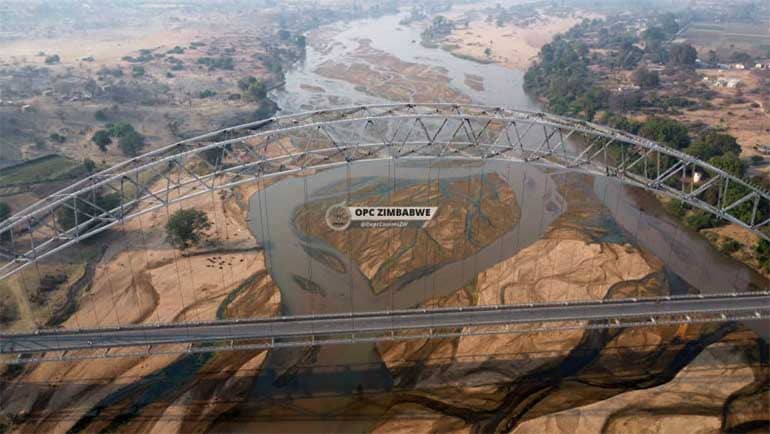
A provincial technical committee in Manicaland has produced site-specific rehabilitation plans for four rivers damaged by illegal gold mining after President Emmerson Mnangagwa declared a state of disaster on the affected waterways.
The blueprint covers the Save, Mutare, Nyamukwarara and Haroni rivers, which officials say have suffered pollution, heavy siltation, collapsed channels and disrupted aquatic habitats due to years of unregulated mining activity.
The Government formalised the disaster declaration through the Civil Protection (Declaration of State of Disaster: Emergency Riverine Ecosystems Rehabilitation) Notice, 2026, which was published in an Extraordinary Government Gazette last week. Authorities say the notice allows emergency resources to be mobilised, multiple contractors to be appointed and large-scale restoration to be coordinated.
Minister of State for Manicaland Provincial Affairs and Devolution, Advocate Misheck Mugadza, said the province is working under an inter-ministerial programme and that two statutory instruments issued this year provide the guidelines that were required to structure rehabilitation.
“The situation regarding the rehabilitation of degraded rivers in Manicaland is the same as the whole country. There is an inter-ministerial committee running the programme. Of late, two Statutory Instruments (SIs) have been promulgated (SI91 of 2026 and SI92 of 2026). These are the guidelines we have been waiting for to guide the manner in which the rehabilitation will be done,” Mugadza said.
He said companies with experience and capacity have been invited to submit applications, with a national “clearing house” expected to select contractors to be assigned to specific rivers before engagements begin at provincial level.
“We have invited companies capable of doing rehabilitation, with experience and means, to submit their applications… the SIs have put in place a clearing house at national level that will select companies to be assigned to each river,” he said, adding that four rivers in Manicaland are currently earmarked.
Mugadza said a technical committee has already developed the programmes rehabilitators are expected to follow. The committee brings together the Environmental Management Agency, the Zimbabwe National Water Authority (ZINWA), the ministries responsible for Lands and Mines, and his office, among other institutions.
In the affected districts, some traditional leaders have raised concerns about how river rehabilitation and mining control is being managed. Chief Mutasa, whose area includes sections of the Mutare and Nyamukwarara rivers, blamed illegal alluvial mining and said traditional leaders are being sidelined in the allocation of mining claims and rehabilitation work.
“What destroyed these rivers is illegal alluvial mining. The problem is that when it comes to mining, as traditional leaders we do not have control over it. The Ministry of Mines and Mining Development just issues licences, and when one gets that authorisation, they start mining, and as traditional leaders there is nothing we can do about it,” Chief Mutasa said.
He added that traditional leaders were excluded from the technical committee, despite what he described as their role as custodians of waterways and knowledge of sacred pools. “We know the sacred pools along the rivers. We have lasting solutions to these problems, but they did not consult us,” he said, also claiming there are cultural areas that should not be disturbed.
Meanwhile, police have stepped up operations against illegal gold panning in Manicaland. Authorities recently arrested hundreds of artisanal miners, including nine Chinese nationals, for illegal mining along the Mutare and Haroni rivers in Vimba, Chimanimani, and recovered mining equipment valued at thousands of dollars.
The crackdown follows a blanket ban on alluvial mining along rivers and public streams under Statutory Instrument 188 of 2024. The law provides for fines of up to Level 14, not less than US$5 000, imprisonment of up to 12 months, or both, and allows for the seizure of minerals, vehicles or machinery used in offences.
Concerns raised by communities and environmental monitors along the Haroni basin include allegations of mercury contamination, livestock deaths, destruction of aquatic life and open pits left behind. The report also notes an incident in which a Chinese company was fined US$2 000 by EMA for operating without an Environmental Impact Assessment.
Residents in the area have reported that some traditional swimming and fishing spots have been damaged, including Nyakwaa Forest and Pool, described as a former tourist attraction near the Chimanimani Mountain Range, while irrigation-dependent agriculture such as banana production has also been affected by polluted water.
Although the story relates to Manicaland, the river rehabilitation programme and enforcement of alluvial mining restrictions are also closely watched in Mashonaland Central, where communities along rivers feeding into major catchments have reported similar pressure from artisanal mining, siltation and water pollution.






Mundubile seeks new party route as Hichilema eyes second term
Mundubile seeks new party route as Hichilema eyes second term For all the News from Mashon…

Baradzanwa Cultural Village Emerges as a Premier New Year Tourism Destination in Mazowe
For all the News from Mashonaland Central, Join One of Our Groups Multitudes of …