

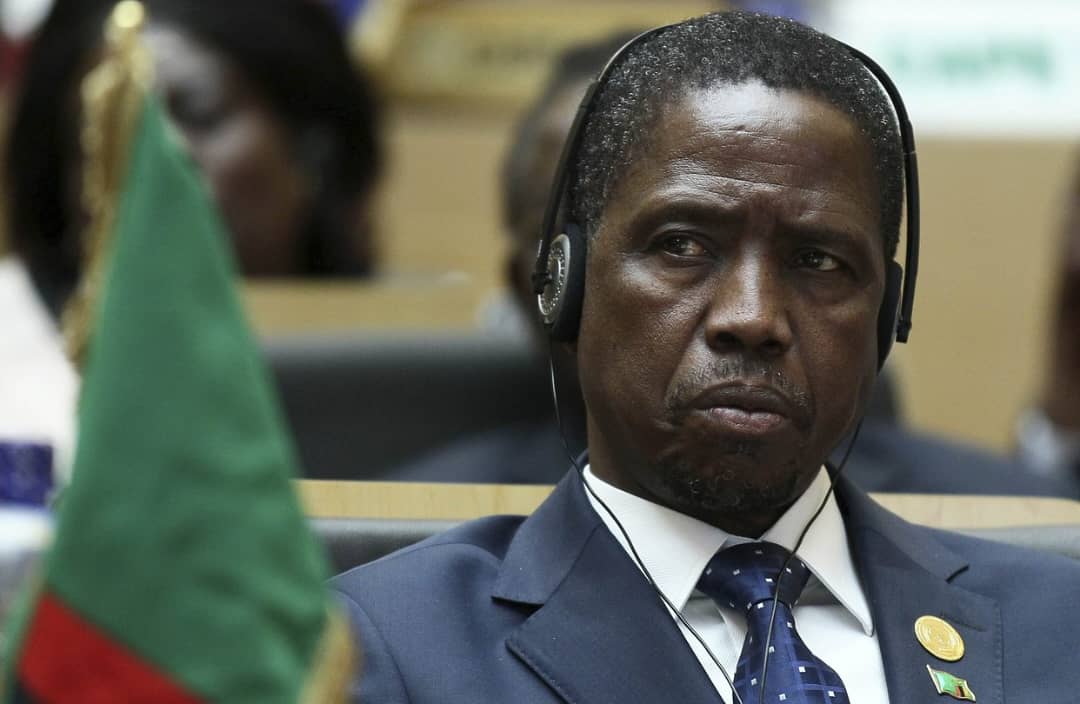
S’Africa appeal court blocks Zambia bid to control Lungu burial

S’Africa appeal court blocks Zambia bid to control Lungu burial
For all the News from Mashonaland Central, Join One of Our Groups
The South African Supreme Court of Appeal has overturned a previous High Court decision that had allowed the Zambian government to repatriate the remains of former President Edgar Chagwa Lungu for a state funeral and burial in Lusaka.
In a majority judgment delivered by Judge of Appeal R M Keightley, the court ruled that the Zambian government failed to prove it had any legal right to override the wishes of Lungu’s family regarding funeral and burial arrangements.
The ruling reverses an August 2025 order by the Gauteng High Court in Pretoria, which had found that Zambia could repatriate the late former president’s body for a state funeral and burial at Embassy Park in Lusaka.
The appeal court placed significant weight on evidence from former First Lady Esther Lungu and other relatives that Lungu had repeatedly expressed that President Hakainde Hichilema and the Zambian government should not take part in his funeral or burial.
According to the judgment, Lungu believed he had been mistreated after leaving office and did not want those he felt had “forsaken him in life” to be involved in his final rites. The court found that the evidence showed he consistently opposed President Hichilema’s participation, and that the family’s decision to honour his wishes was reasonable.
The judgment also details a difficult post-presidency relationship between Lungu and the authorities. It refers to incidents including the withdrawal of former presidential benefits, closure of his office, restrictions on travel, and an episode in which he was removed from a flight to South Korea. The court further noted that he was denied permission to travel to South Africa for medical treatment in 2023.
After he later travelled to South Africa in January 2025, the court said Lungu was diagnosed with terminal oesophageal cancer that was advanced and inoperable. He remained in South Africa receiving palliative care until his death on 5 June 2025.
On the legal dispute itself, the Supreme Court of Appeal rejected Zambia’s argument that it had a right under Zambian law, protocol or custom to determine how a former head of state should be buried. The court found the government had not provided expert evidence to establish such a right under Zambian law and held that, without it, South African legal principles applied.
The appeal court said South African common law and constitutional principles recognise the rights of next of kin to make burial decisions, and protect family dignity, privacy and autonomy. It stated that, “Absent a clear and convincing legal basis,” it would not be constitutionally permissible for the Zambian government’s interests to override those of the family.
The Zambian government also argued that the family had agreed, after Lungu’s death, to a state funeral and burial in Zambia. However, the court found the documents presented were proposals exchanged during ongoing discussions, and did not amount to a binding agreement. It concluded there was no enforceable contract between the parties.
The appeal was upheld, the earlier High Court judgment was set aside, and the Zambian government’s application was dismissed with costs. The decision returns control of burial arrangements to the Lungu family, ending—at least in the South African courts—an international legal dispute that has drawn wide attention across the region.

Mundubile seeks new party route as Hichilema eyes second term
Mundubile seeks new party route as Hichilema eyes second term For all the News from Mashon…

Baradzanwa Cultural Village Emerges as a Premier New Year Tourism Destination in Mazowe
For all the News from Mashonaland Central, Join One of Our Groups Multitudes of …