

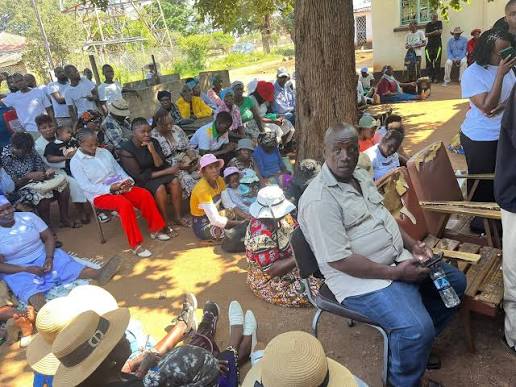
The Court of Public Opinion: Nationwide Hearings Spark Intense Debate Over Constitution Amendment (No. 3) Bill

The Court of Public Opinion: Nationwide Hearings Spark Intense Debate Over Constitution Amendment (No. 3) Bill
For all the News from Mashonaland Central, Join One of Our Groups
Public debate over the Constitution Amendment (No. 3) Bill moves directly to communities between 30 March and 4 April 2026 as the Parliamentary Portfolio Committee on Justice, Legal and Parliamentary Affairs deploys teams across the country’s administrative districts. Assigned to gather public views following the Bill’s gazetting, MPs and officials encounter high turnout, sharp political differences and a range of practical challenges at consultation venues.
The nationwide hearings take place as part of the constitutional procedure required under Section 328 of the Constitution of Zimbabwe. Under this section, Parliament cannot vote on an amendment without first consulting the public. Over six days, meetings are held in community halls, school grounds and civic centres, including in districts across Mashonaland Central, as citizens, political activists and legal practitioners present oral and written submissions.
The hearings expose a divided national mood. Supporters of the Bill, often arriving in organised groups, argue for the “2030 Agenda” and say executive continuity is necessary to complete long-term economic and infrastructure programmes linked to Vision 2030. In their view, the country should avoid policy disruption during major development cycles, and they frame the amendment as a route to stability.
Opponents, including civil society organisations, human rights defenders and opposition supporters, challenge the proposal at multiple venues. Many refer directly to the gazetted text, raising concerns about changes affecting constitutional term limits and executive succession. They argue that predictable and time-bound transfers of power are a core democratic safeguard and warn against weakening constitutional checks and balances.
Alongside the debates, participants raise logistical concerns. Some civic organisations criticise what they describe as rapid scheduling, arguing the six-day period limits coverage of all administrative districts. In some rural communities, residents complain about late notification and the absence of simplified or translated versions of House Bill 1 of 2026, leaving many people struggling with technical legal language before being asked to comment.
Despite these constraints, participation remains substantial, signalling the significance many Zimbabweans attach to the proposed amendment. The Portfolio Committee now begins the process of compiling oral and written submissions into a report for the National Assembly, as the Constitution Amendment (No. 3) Bill moves closer to parliamentary debate under the wider “2030 Agenda.”






Mundubile seeks new party route as Hichilema eyes second term
Mundubile seeks new party route as Hichilema eyes second term For all the News from Mashon…

Baradzanwa Cultural Village Emerges as a Premier New Year Tourism Destination in Mazowe
For all the News from Mashonaland Central, Join One of Our Groups Multitudes of …