

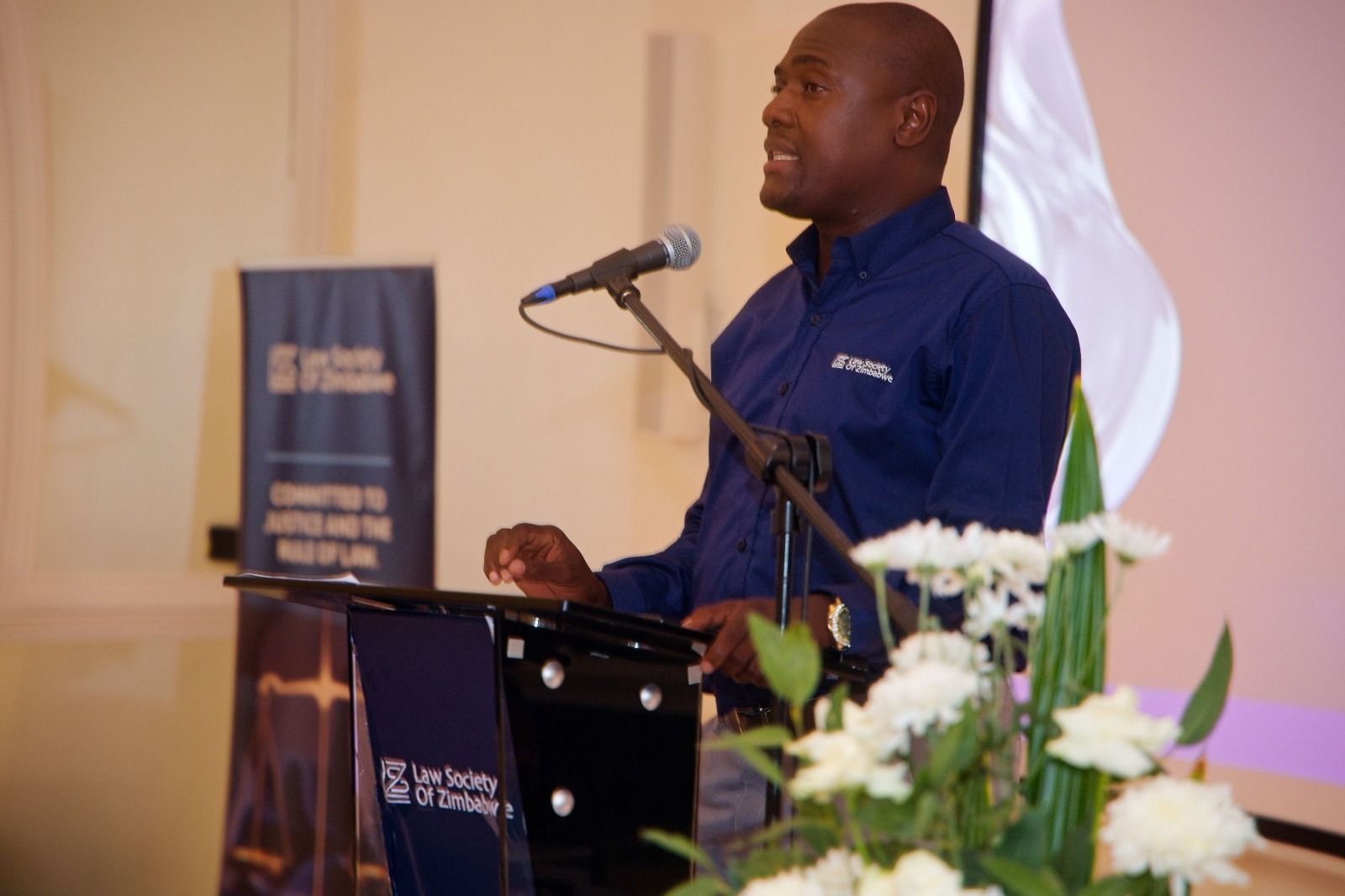
Law Society warns parts of Constitution Amendment Bill No. 3 may weaken electoral and judicial safeguards

Law Society warns parts of Constitution Amendment Bill No. 3 may weaken electoral and judicial safeguards
For all the News from Mashonaland Central, Join One of Our Groups: https://chat.whatsapp.com/KPKHV62YLF92BvfqmgemLT
The Law Society of Zimbabwe (LSZ) has told Parliament that several proposals in Constitution Amendment Bill No. 3 (CAB3) raise “substantive concerns”, including changes affecting voter registration, electoral boundary delimitation, judicial appointments and the independence of key constitutional offices.
In written submissions dated 15 May 2026, the LSZ said it monitored the public hearings process on the Bill, which it states ran from 30 March 2026 to 2 May 2026 across 65 centres nationwide. The professional body said it was making the submissions under its mandate in the Legal Practitioners’ Act (Chapter 27:07) to represent the views of the legal profession and to propose, promote or oppose legislation in Parliament.
CAB3, gazetted on 16 February 2026, seeks to amend Zimbabwe’s 2013 Constitution through a set of wide-ranging clauses. The Bill’s memorandum, as quoted by the LSZ, describes the amendments as “constructive reforms” intended to “reinforce constitutional governance” and “harmonise Zimbabwe’s constitutional order” with practices in “progressive jurisdictions”.
However, the LSZ said its analysis focuses on legal implications rather than political merits. It explained that it examined whether CAB3 is consistent with other constitutional provisions, Zimbabwe’s international law obligations, and the procedural requirements for passing each amendment, including whether a referendum is required.
According to the LSZ, some elements of CAB3 “do not at this stage raise substantive concerns” about conflict with the Constitution or international law. These include the proposed shift from direct presidential elections to a parliamentary method of electing the President (clauses 3 and 6), deleting the word “first” before “Vice President” (clause 5), changing the Attorney-General qualification threshold to that of a Supreme Court judge (clause 7), widening the Constitutional Court’s jurisdiction to hear matters of “general public importance” (clause 14), an adjustment to the Defence Forces’ constitutional obligation (clause 16), dissolving the Zimbabwe Gender Commission with its functions transferred to the Zimbabwe Human Rights Commission (clauses 18 and 19), and repealing provisions linked to the National Peace and Reconciliation Commission (clause 22).
To Advertise Inbox Us: https://wa.me/263719679800
The LSZ said “substantive concerns do arise” in relation to six other proposed changes. These include transferring responsibility for voter registration and the voters’ roll from the Zimbabwe Electoral Commission (ZEC) to the Registrar-General (clauses 2 and 17), and creating a new Zimbabwe Electoral Delimitation Commission (ZEDC) to take over delimitation of electoral boundaries from ZEC (clauses 11, 12 and 13).
It also flagged the proposal to increase the number of senators from 80 to 90 by allowing the President to appoint 10 additional senators (clause 6), and the proposal to change the appointment regime for judges so that all judges would be appointed by the President after consultation with the Judicial Service Commission (clause 15).
Further, the LSZ raised concern about removing the requirement that the President’s appointment of the Prosecutor-General be “on the advice of the Judicial Service Commission” (clause 20). It also criticised the proposed repeal of constitutional provisions that prohibit traditional leaders from membership of political parties and participation in partisan politics (clause 21), including prohibitions on acting in a partisan manner or furthering the interests of a political party or cause.
On procedure, the LSZ said that, with one exception, CAB3 may be passed under the “ordinary requirements for a Constitutional Bill” in section 328 of the Constitution, without the need for a referendum. The exception, it said, is clauses 4, 9 and 10, which propose extending presidential and parliamentary terms from five years to seven years and, in the LSZ’s view, seek to amend section 328 itself by negating section 328(7), which provides that amendments to term-limit provisions do not apply to incumbents.
The LSZ argued that section 328 may only be amended by following procedures that include a referendum, citing section 328(9). “Clauses 4, 9, and 10 are required to be passed in accordance with the procedure set in Section 328(6) which includes a referendum,” the LSZ said. It added that if these clauses are adopted without a referendum, such adoption “will be inconsistent with the Constitution and international law”.
In its broader legal framing, the LSZ pointed to principles of constitutional interpretation requiring provisions to be read together and interpreted harmoniously, citing the Constitutional Court’s approach in Tsvangirai v Mugabe. It also outlined arguments, drawn from comparative case law in jurisdictions such as India, Colombia, South Africa, Kenya and Taiwan, suggesting there may be implied limits on constitutional amendment powers, particularly where amendments conflict with other specific constitutional provisions or with founding principles in Chapter 1, including the supremacy of the Constitution, the rule of law, and multi-party democracy.
The LSZ further said Zimbabwe’s international obligations are relevant when assessing CAB3, pointing to the Constitution’s requirement that courts take international law into account when interpreting rights in Chapter 4, and referencing instruments including the International Covenant on Civil and Political Rights (ICCPR), the African Charter on Human and Peoples’ Rights, and the African Charter on Democracy, Elections and Governance, among others.
Section 328 of the Constitution sets out procedural requirements for constitutional amendments, including a requirement for at least 90 days’ notice in the Government Gazette of the precise terms of a constitutional bill, public consultation through meetings and written submissions, and a two-thirds majority in both the National Assembly and Senate at the last reading.
Follow Our WhatsApp Channel for all the News from Mashonaland Central – Bindura, Mbire, Guruve, Mount Darwin, Rushinga, Shamva, Mazowe & Muzarabani: https://whatsapp.com/channel/0029VacMUmW5fM5a666kb33A


Mundubile seeks new party route as Hichilema eyes second term
Mundubile seeks new party route as Hichilema eyes second term For all the News from Mashon…

Baradzanwa Cultural Village Emerges as a Premier New Year Tourism Destination in Mazowe
For all the News from Mashonaland Central, Join One of Our Groups Multitudes of …