

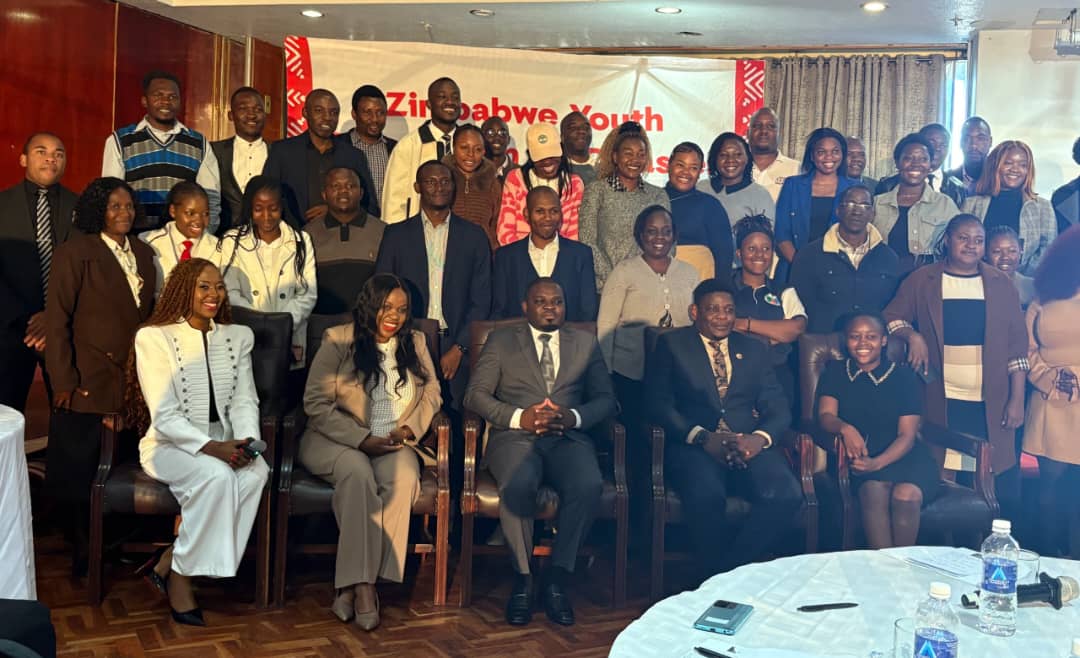
Zimbabwe youth demand stronger role in disaster risk management reforms

Zimbabwe youth demand stronger role in disaster risk management reforms
For all the News from Mashonaland Central, Join One of Our Groups
Young Zimbabweans are pushing for a stronger, formal role in disaster risk management as Government works on a new Disaster Risk Management (DRM) Bill to replace the Civil Protection Act.
The calls were made at the 3rd Zimbabwe Youth Symposium on Disaster Risk Reduction in Harare, held under the theme “From Risk to Resilience: Reclaiming Youth Agency in Disaster Risk Management”. The symposium brought together young researchers and community activists alongside government officials, civil society and development partners.
Speakers said the platform has grown quickly since its first edition in November 2024, which led to the establishment of the Zimbabwe National Youth Desk on Disaster Risk Reduction. At the second symposium in May 2025, a youth position document was presented at the Global Platform for Disaster Risk Reduction in Geneva, marking Zimbabwe’s first youth contribution to a global multilateral disaster risk process.
Ruth Chomola, presenting on behalf of the Africa Youth Advisory Board on Disaster Risk Reduction (AYAB-DRR), said the continental initiative was designed to institutionalise youth participation in disaster risk governance across African Union member states.
“As AYAB, we designed the platform in light of the need to institutionalise youth participation and contribution to DRR at member state level. So we decided to replicate the model in Zimbabwe — and we are very humbled by the reception we received,” Chomola said.
She said Government recognition of the youth desk, and its placement within the Department of Civil Protection, was important for ensuring young people’s contributions go beyond token participation.
“Government recognising the youth desk as the first ever of its kind in DRR is a humbling reminder that our voices are heard and that we are pivotal priority stakeholders in Zimbabwe’s disaster risk management,” she said.
Deputy Minister of Local Government and Public Works, Hon. Eng. B. Kabikira, told delegates that young people should be treated as partners in building resilience.
“Young people are not merely beneficiaries of Disaster Risk Reduction interventions. They are indispensable partners in building resilient communities and a resilient nation,” Kabikira said.
He said Government is at an advanced stage of developing a new Disaster Risk Management Bill, which he described as a shift towards prevention, preparedness, mitigation, resilience building, recovery and sustainable development.
“The proposed DRM Bill represents a major shift from a disaster response-oriented approach towards a comprehensive disaster risk management system that prioritises prevention, preparedness, mitigation, resilience building, recovery, and sustainable development,” Kabikira said.
ActionAid Zimbabwe Country Director Dr Selina Pasirayi said disaster resilience needs a coordinated approach involving government, civil society and communities, drawing on the organisation’s experience responding to Cyclone Idai in Chimanimani and Chipinge in 2019 and working in other disaster-affected areas including Mbire, Binga and Tongogara Refugee Settlement.
“Resilience is not delivered by a single actor. It is constructed through layered responsibility — government leadership, civil society engagement, and above all, community agency,” Pasirayi said.
She also highlighted the gendered impact of disasters and called for women and girls to be recognised as leaders in resilience building.
“Women and girls consistently bear disproportionate impacts during crises, while simultaneously holding critical knowledge for resilience-building,” Pasirayi said. “Any serious disaster risk agenda must therefore recognise them as leaders, not merely beneficiaries.”
Organisers said one focus of this year’s symposium was youth-produced evidence. Research panels featured papers by young Zimbabweans on issues including innovation and technology for early warning systems, governance and natural resource management, and gender and community resilience.
Delegates also examined the relationship between natural resource governance and disaster risk, including how mining activity can raise environmental hazards for nearby communities, and how policy frameworks such as the Mines and Minerals Amendment Bill and the proposed DRM Bill might be aligned.
Chomola urged sustainable resource extraction that supports long-term resilience. “We advocate for sustainable extraction of resources so that we build resilience and also save and accumulate wealth for the future,” she told the symposium.
Participants said policy commitments must be matched with financing if communities are to benefit through practical preparedness, effective early warning systems and risk-informed development planning.
The symposium was convened by the Department of Civil Protection under the Ministry of Local Government and Public Works, in partnership with ActionAid Zimbabwe, the Zimbabwe National Youth Desk on DRR and AYAB-DRR. Expected outputs include a Zimbabwe Youth Position Statement on DRR, research publications and policy recommendations to be submitted to government ministries and parliamentary portfolio committees.





Mundubile seeks new party route as Hichilema eyes second term
Mundubile seeks new party route as Hichilema eyes second term For all the News from Mashon…

Baradzanwa Cultural Village Emerges as a Premier New Year Tourism Destination in Mazowe
For all the News from Mashonaland Central, Join One of Our Groups Multitudes of …